
Are Israeli wines world-class? For those like me with a strong affinity for our homeland, we have no doubt. We can point to Israeli wineries that regularly are awarded top scores. Wineries such as Castel, Flam, and the Golan Heights Winery rack up medals at competitions worldwide. Jezreel Winery’s Carignan recently became the first kosher and Israeli wine on the menu at a 3-star Michelin restaurant in France. However, the broader wine world has not taken much note of Israeli wines.
Walk into any general wine store, and there are always sections devoted to France, Italy, Spain, Germany, Austria, and sometimes Greece. Most even feature wines from Argentina and Chile, as well as Australia and South Africa. The USA is a mainstay, with California, Oregon, and Washington typically receiving top billing. However, outside of kosher wine stores, there is rarely (as in never) an Israeli wine section. There may be a kosher wine section, with Israeli wines represented for the convenience of the kosher consumer. Still, customers typically have little to no exposure to Israel as a wine region. The WSET 3 course I recently completed is the “gold-standard” in the wine trade, requiring extensive knowledge about winemaking in dozens of worldwide areas. Israel is not one.
Creating a wine region’s reputation can take decades, especially with the long history of winemaking in top regions. Although there is a historical record of winemaking in Israel thousands of years ago, they were primarily sacramental or simple wines of low quality. Only in the 1970s did the first quality dry wines begin to appear in Israel. Perhaps Israel needs a “Judgement of Paris” moment. USA’s prohibition devasted California winemaking. Decades later, in the 1970s, the top California wines began gaining attention. However, the wine industry did not consider these so-called “New World” cabernets and chardonnays in the same league as the Old World French elite wines. But that changed after “The Judgement of Paris” pushed California wines to the top (see footnote for information on the event).
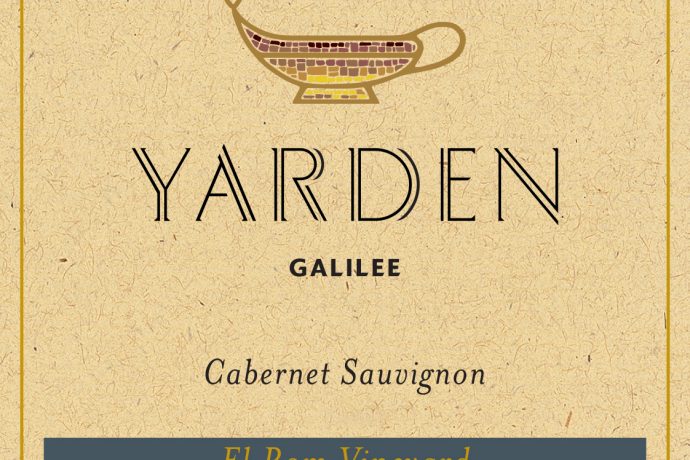
Israel does make some superb Cabernets. The Golan Heights Winery Yarden El Rom Cabernet Sauvignon sells for over $100, is aged 18 months in French oak barrels, and is “a sophisticated wine for a mature palate,” according to KosherWine com. This wine will age well for over a decade, with additional notes developing as the tannins soften. But can Israel ever be truly famous for Cabernet Sauvignon or Merlot when competing against wines from France, California, or other countries with top reputations?
Some experts note that Israel’s warm Mediterranean climate may not be ideal for Cabernet or Merlot – the French Bordeaux region famed for these grapes is decidedly cooler and wetter. Although Napa Valley, California, has a warm climate, mountain elevations, and cold air from the San Francisco Bay cool the best wine areas in Napa. Israel also has mountainous regions like the Golan Heights and Judean Hills. Still, like most of Israel, they have a warm Mediterranean climate, similar to areas of Italy or France’s Rhone winemaking region. Leading Israeli winemakers are advocating for a focus on Mediterranean varietals, such as Carignan, Grenache, and Petite Syrah, as they tend to fare better in Israel’s climate. Many are now championing white wines, arguing they are better suited to Israeli cuisine and are lighter and more refreshing to drink in hot climates.
One of Israel’s top winemakers, Netofa Winery’s Pierre Miodownick, is committed to finding varietals more appropriate for the Israeli climate and terroir. Located in the foothills of Mt. Tavor, Netofa makes some lovely white wines. Royal Wines recently sent me some wines to review, and I was excited to find one of them was the Netofa LATOUR Chenin Blanc. Chenin Blanc is a grape native to France’s Rhone Valley. The complex and structured white wine demonstrates the potential of Israel’s terroir when matched with the right grapes. This serious wine offers a medium body with notes of tart pear, quince, lime, and good acidity and can be enjoyed with a full meal or as an enjoyable warm-weather picnic wine. You should be able to purchase this non-mevushal bottle for about $30.
One challenge for Israeli winemakers championing white wines is that today’s kosher market skews heavily towards red wines. Partly driven by the desire for red wines for kiddush, some of the demand is due to a misimpression that red wines are a higher-quality production. Sadly, too many believe that white wines are less serious for connoisseurs. Hopefully, quality white wines emerging from Israel will help change that viewpoint. Evidence from restaurants in Israel, which often indicates leading trends, shows that Israelis are starting to drink more white wine. With summer approaching, now is the time to stock up on some good white wines, but avoid older bottlings, as most white wines should be consumed early after release. Serve them chilled, and enjoy!
EDITOR’S FOOTNOTE:
In 1976, Steven Spurrier, a British wine merchant who specialized in selling French wines, and his colleague Patricia Gastaud-Gallagher (director at the Académie du Vin) held a wine-tasting event in Paris, France, known then as The Paris Wine Tasting of 1976. Spurrier presented French and Californian wines (10 chardonnays and ten cabernet/Bordeaux reds) to a panel of renowned French oenophiles in a blind tasting. The Californian wines topped each category, with Chateau Montelena’s 1973 chardonnay and Stag’s Leap’s 1973 cabernet taking top honors. The event turned the wine world on its head and became known as “The Judgement of Paris,” an allusion to the ancient Greek myth.


0 Comments